
Day Trip to Tai O Fishing Village, Hong Kong
Thinking of taking a day trip to Tai O Fishing Village? You’ve come to the right place!
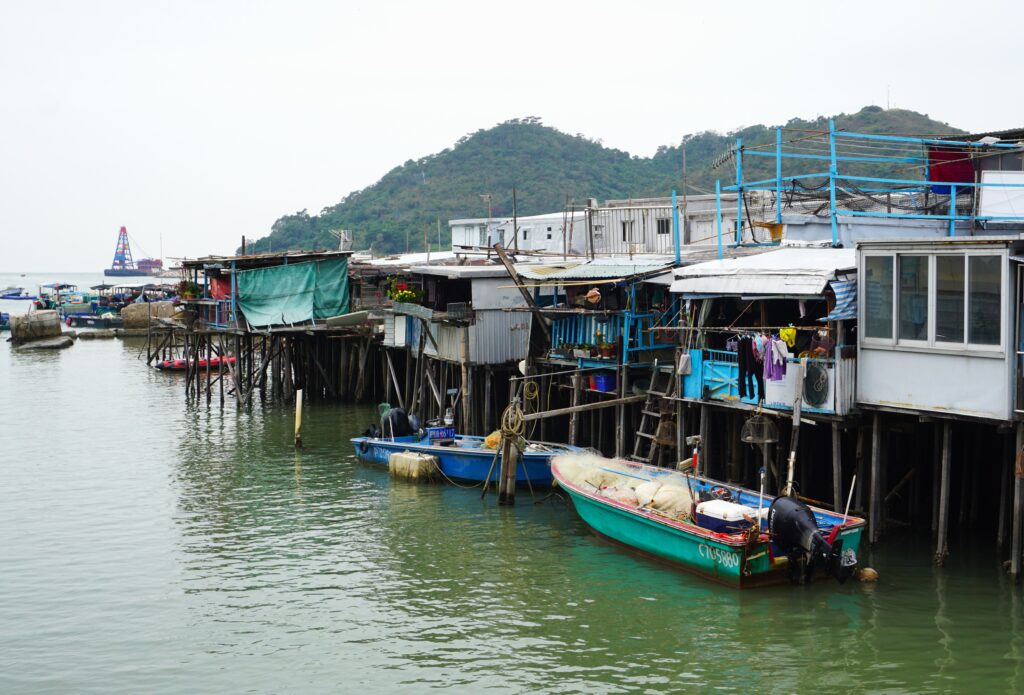
Tai O Fishing Village feels worlds away from central Hong Kong. Instead of glass towers and packed sidewalks, you’ll find stilt houses built on water, fishing boats drifting past front doors, and locals selling shrimp paste and snacks from makeshift street stalls.
It’s quiet by Hong Kong standards, slightly gritty, and refreshingly real.
Tai O is located on the western edge of Lantau Island. There are no major sights or “must-do” activities. It’s a place to wander, eat well, and observe a soon-to-be bygone way of life.
If you’re already heading to the Tian Tan Buddha or Ngong Ping, adding Tai O makes for a well-rounded Lantau Island day trip, one that shows a very different side of Hong Kong than most visitors ever see.
In this guide, I cover how to get to Tai O, what to expect when you arrive, and how to make the most of your time there. Let’s dive in!
Please note this post may contain affiliate links. If you click on one, I may earn a small commission at no extra cost to you. See my Privacy Policy for more information.
History of Tai O
Tai O is one of Hong Kong’s oldest fishing villages, with permanent settlement dating back over 1,000 years. It was historically a Tanka village, inhabited by the Tanka people: a traditionally boat-dwelling fishing community who lived on the water rather than on land. Many families in Tai O lived and worked entirely from their boats, shaping the village’s strong maritime identity.
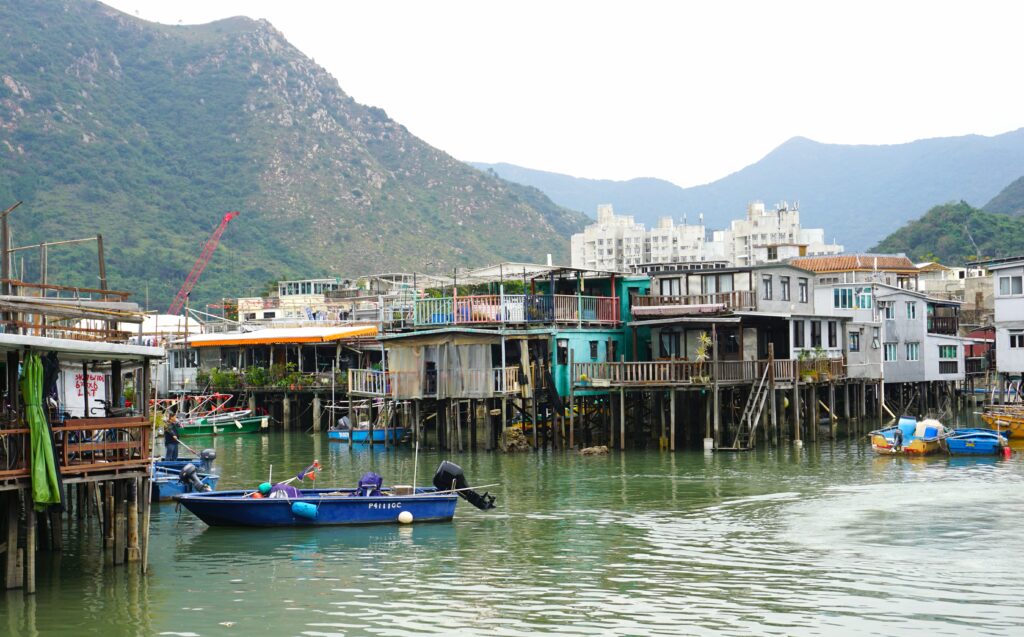
Built along tidal waterways, Tai O’s stilt houses rise directly over the water, earning it the nickname the “Venice of Hong Kong.” The village’s sheltered inlets also made it a strategic location for fishing, salt production, and, at various points in history, smuggling and piracy.
Over time, Tai O became a point of arrival for migrants and refugees, particularly during periods of unrest in mainland China. While fishing once sustained the entire community, that lifestyle has steadily declined, and many younger residents have moved away.
Today, Tai O is a living village and, although increasingly shaped by tourism, offers a rare glimpse into a traditional way of life that is slowly fading.
Should You Visit Tai O Fishing Village?
There are really two questions here: Is Tai O worth visiting, and should you visit Tai O?
Firstly, I think Tai O fishing village is absolutely worth visiting! I had a great time exploring the town, taking in the atmosphere, and tasting some delicious food. It’s certainly not a marquee site, and there’s nothing you must do while here, but it’s an interesting glimpse at a historic fishing community and an incredible contrast from the hustle and bustle of Hong Kong city.
While I don’t think Tai O is worth a trip on its own, it’s perfect to pair with the Big Buddha and Po Lin Monastery as a Lantau Island day trip.

Now, regarding the question surrounding the ethics of visiting Tai O…
I’ve read varying opinions, with some people writing they felt uncomfortable visiting because the village is poor, and it made them feel voyeuristic. While I understand this perspective, I disagree that this should keep you from going.
Visiting Tai O is an opportunity to see a genuine and historic fishing village. It’s not glitzy or glamorous, but it is authentic. One of the best things about travel is seeing how others live. As long as you’re not treating the people there like they’re an attraction, I don’t see a problem with visiting a village to see how people live.
Not to mention that tourism is bringing lots of money into the village. Most of the food stalls and stands set up along the road are run by locals who have put out a table and are selling their products. Your visit there is a boon for the local economy and helps people make a living.
The downside of this is that, as Tai O becomes more popular, the tourism will ultimately ruin the authenticity of the village. This is a larger problem with overtourism, and not unique to this small fishing village, but a concern nonetheless.
So all this is my long-winded way of saying: Yes, you should go to Tai O. Don’t miss out on an opportunity to see a different, more traditional way of life before it’s gone for good.
How to Get to Tai O Fishing Village
Bus schedules are subject to change. Please double-check routes and times.
Tai O is located on Lantau Island in Hong Kong.
I recommend pairing your trip to Tai O with a visit to the Big Buddha and Po Lin Monastery in Ngong Ping.
From HK Central Station, take the MTR to Tung Chung Station. From there, ride the Ngong Ping 360 cable car up to Ngong Ping.
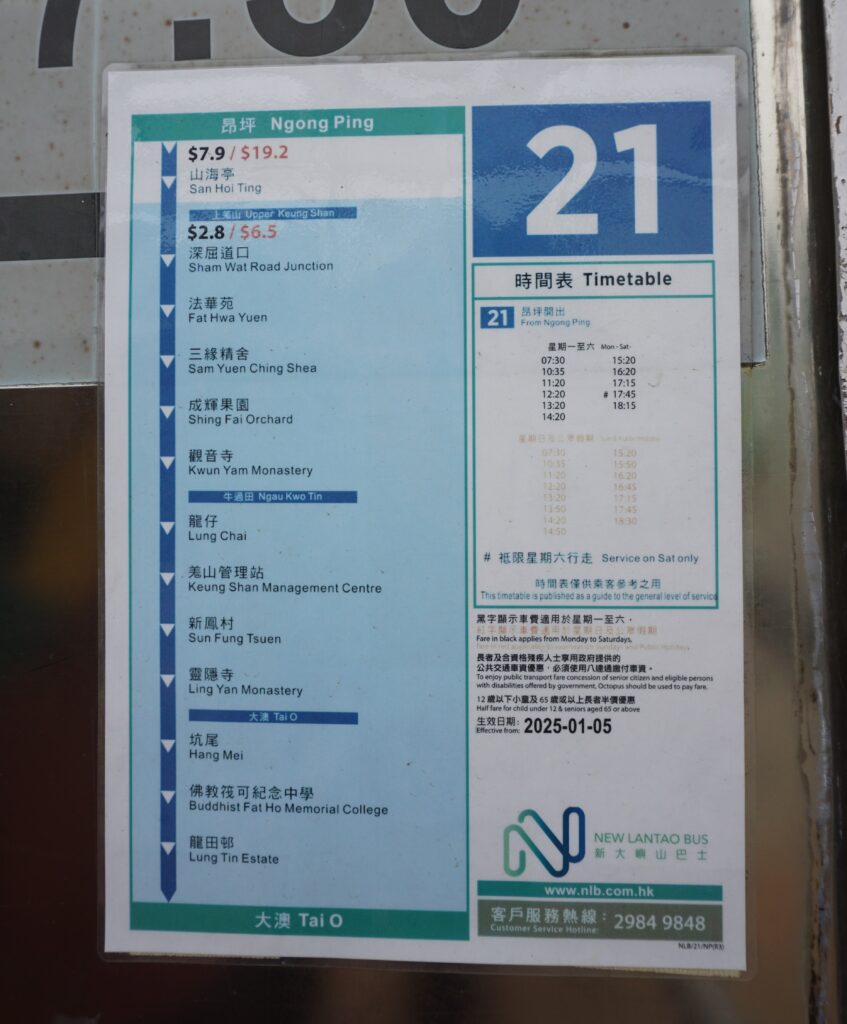
From Ngong Ping, take Bus 21 to Tai O. Buses to Tai O depart every hour, so be sure to plan your visit to the Buddha and Monastery accordingly. Note that schedules change on Sundays and public holidays.
As with most things in Hong Kong, pay for the bus using your Octopus card.
The ride from Ngong Ping to Tai O takes about 25 minutes.
If you decide not to visit the Big Buddha, you can reach Tai O directly from Tung Chung via bus or ferry.
From Tung Chung, take Bus 11 to Tai O. Be sure to check the timetable prior to departure. The bus ride between Tung Chung and Tai O takes about 1 hour and 10 minutes.
There is also a ferry that runs from Tung Chung Development Pier to Tai O and back. Check the schedule and fares here. The ferry ride takes about 1 hour and 20 minutes.
Walking Through the Village
Visiting Tai O is less about ticking off things to do and more about the experience. There are no must-do activities except walking through the town and soaking it all in.
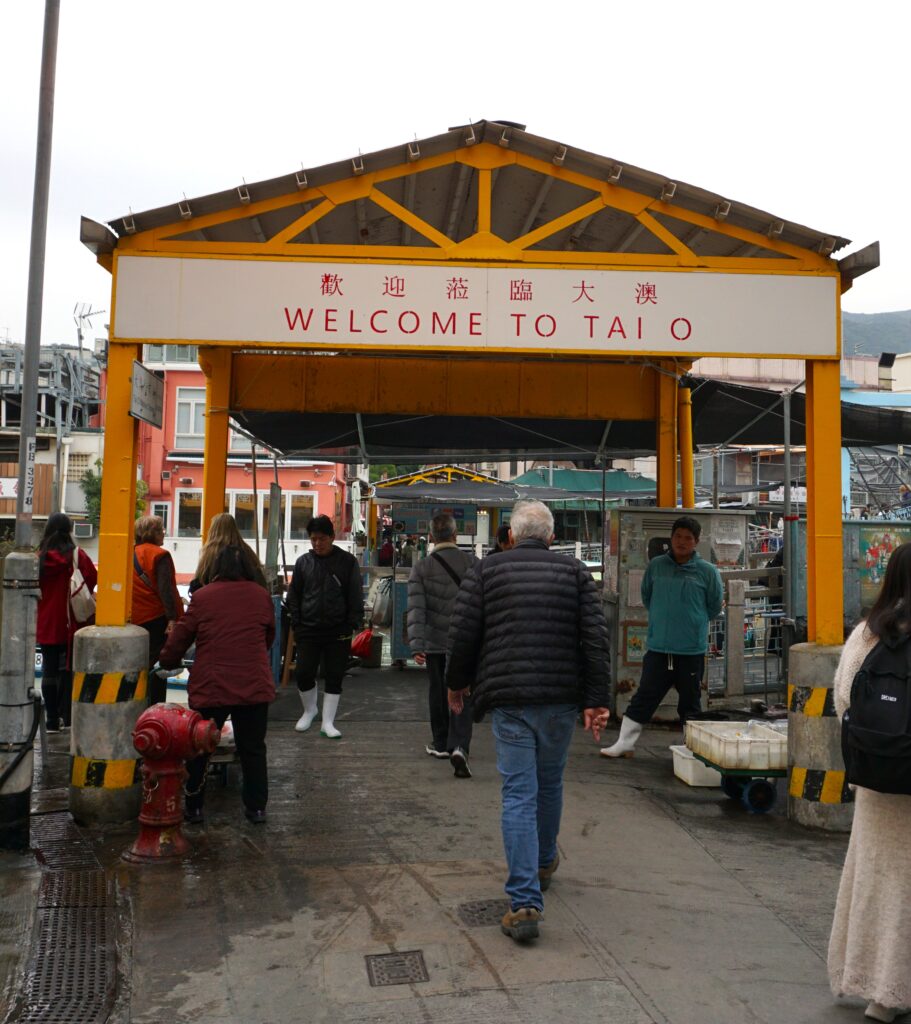
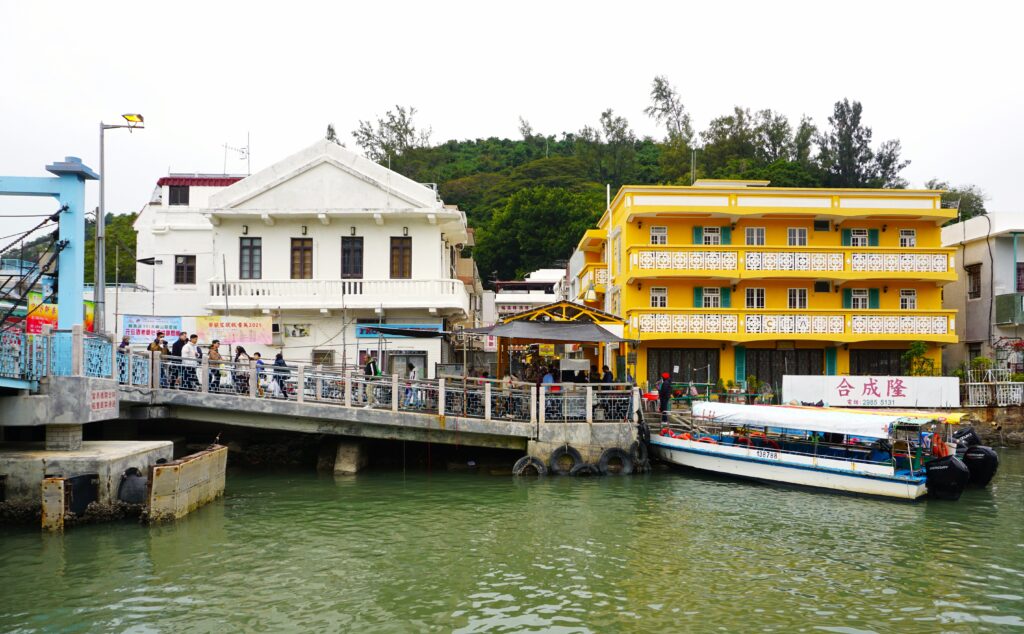
After getting off the bus, we started our visit with a walk along the waterfront towards the town.
As you turn onto Tai O Wing On Street and begin your walk through the narrow streets into the heart of the town, you’re first met by touts advertising boat rides to see the town and the elusive pink dolphins.
While we opted out of taking a boat ride, it is one of the best ways to fully admire the stilted houses. My brother, whom I was traveling with and who has temporary Hong Kong residency, said the boat rides are fun but not necessary and that you’re unlikely to encounter a pink dolphin.

Shortly after, on the right, pop into the small (free) Tai O Rural Committee Historic and Cultural Room. Most of the displays lack English translation, but you will see historic photos of the village and its people, as well as traditional fishing nets and hooks. Spending five minutes in here is a good opportunity to put the village you’re about to explore in context.
The best advice I can give you about visiting the fishing village of Tai O is to come hungry.
The main street is lined with vendors selling all sorts of snack foods, from curried fish balls and grilled squid to fresh, steaming doughnuts and sweet tofu pudding. The tantalizing smells of grilled seafood are sure to have you salivating, so if you spot something intriguing, don’t hesitate to buy it and nibble as you walk.

Before you reach the heart of town, you’ll cross the blue Market Street Drawbridge. This is one of the best spots from which to see the stilted houses that Tai O is famous for.
Grab some photos from the bridge while locals crossing on bicycles ding their bells and try to navigate the daytime tourist hoardes that descend on the town.
Once across the bridge, turn right onto Kat Hing Back St.
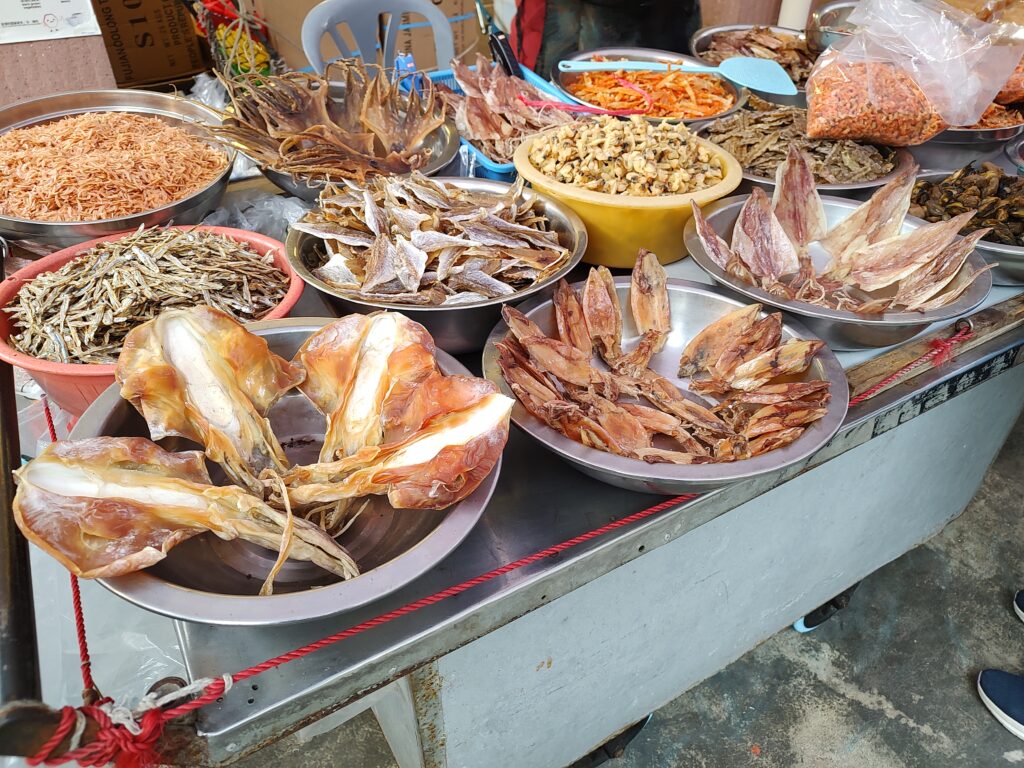
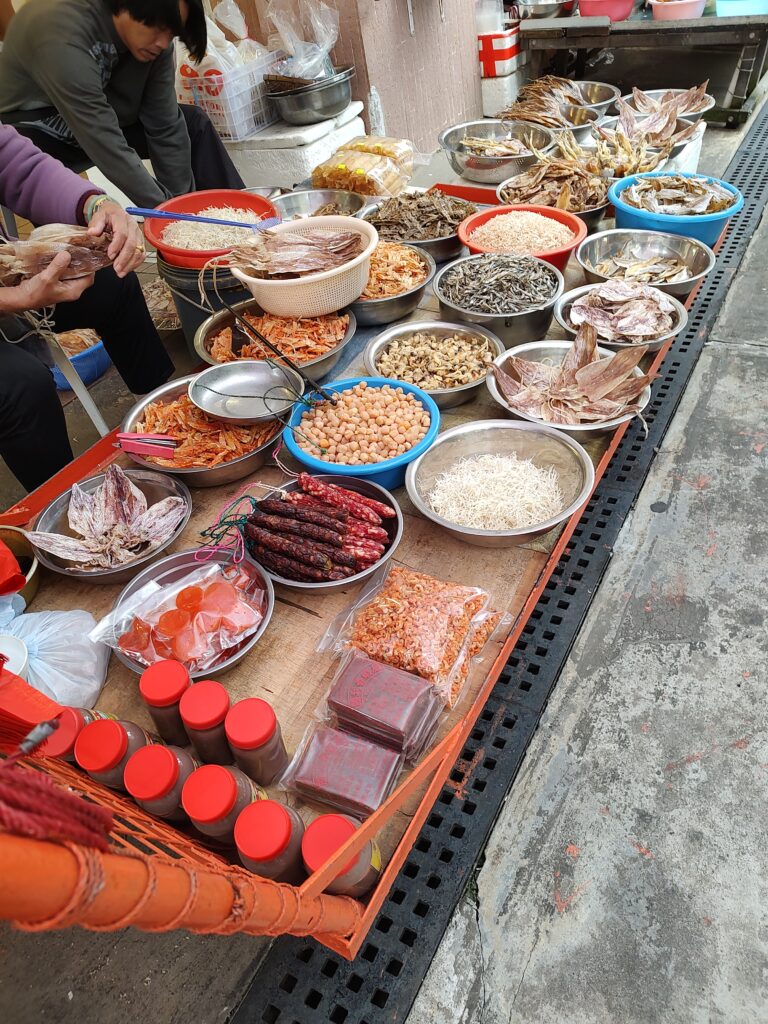
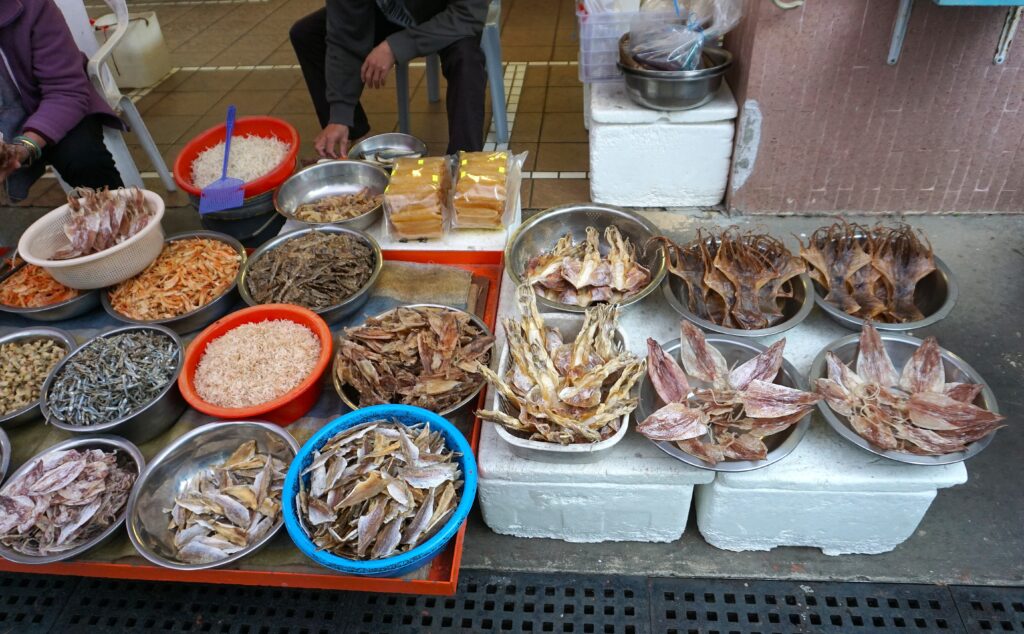
Duck into the Tai O Kwan Tai temples, through the town square, and then continue your stroll along Kat Hing Street through the town, past vendors selling heaps of dried fish and jars of shrimp paste that the town is famous for producing.
If you pay attention, you’ll notice that most of these vendors are pop-up shops selling from their front patios. This small detail shows the authenticity of Tai O – local people taking advantage of a surge in tourism to earn some extra money.
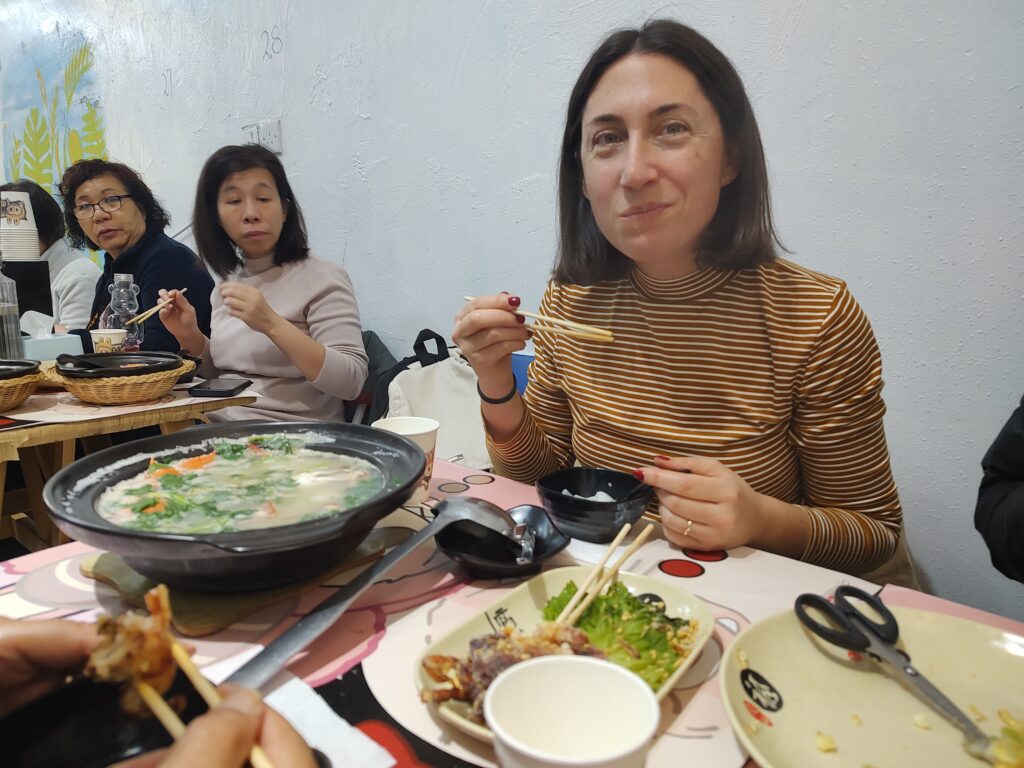
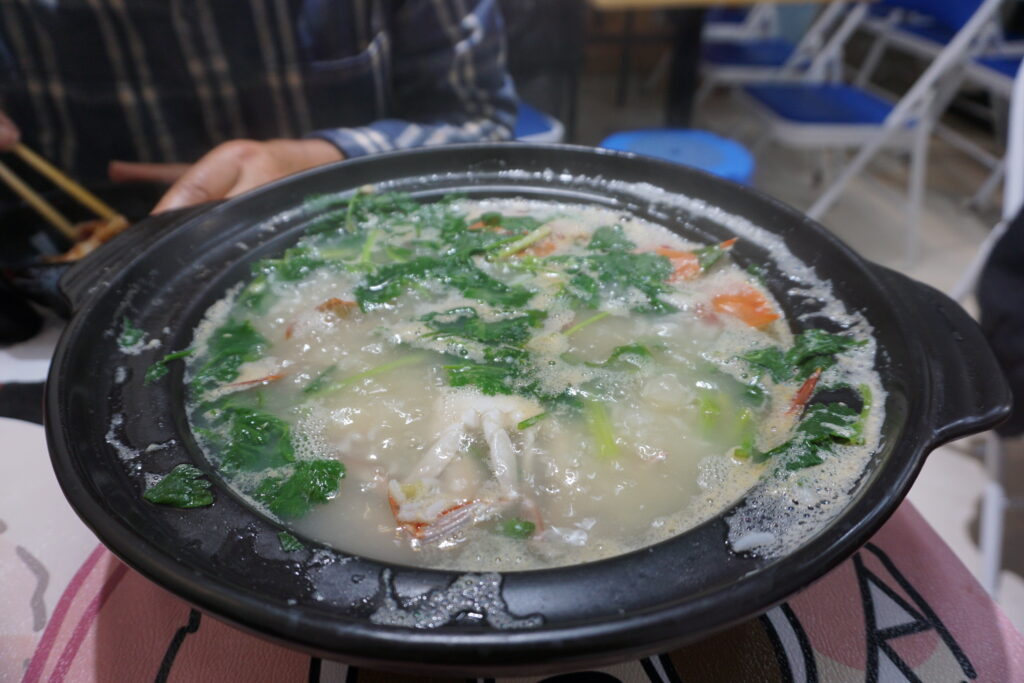
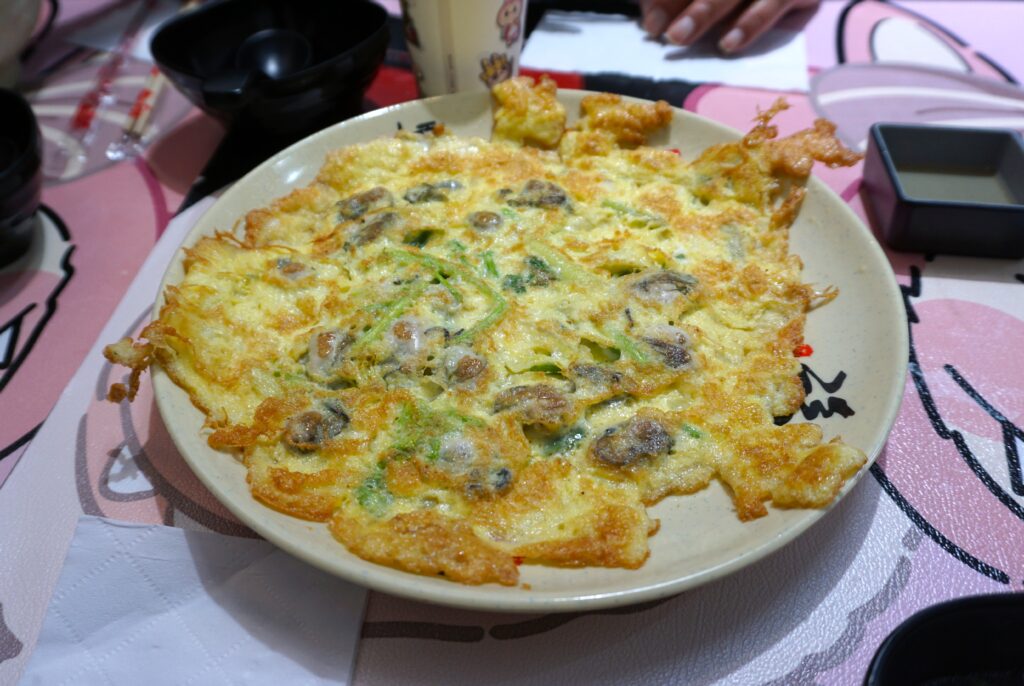
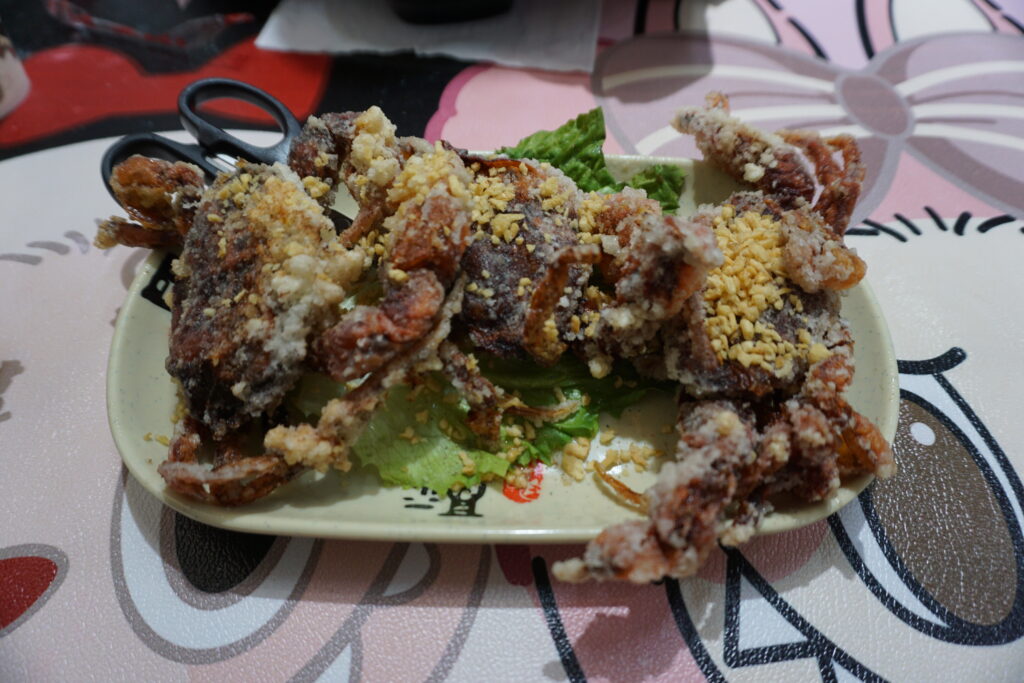
Grab lunch at any place that tickles your fancy, or gorge yourself on fishballs and street food until you simply can’t eat anymore.
Continue your walk, soaking in all the sights of the village. Turn right onto Sun Ki Street and cross over the Sun Ki bridge, built by the villagers in 1979 to allow easier crossing from one side of the river to the other. Before this bridge was built, villagers punted boats to cross the river.
This section of the town is more residential and provides a unique contrast from the touristed center. You’ll no longer see vendors set up and selling jars of shrimp paste and dried seafood.


As you walk, note that you’re right on people’s doorsteps. This is very much a living village. Fish hang out to dry on patios. Boats stream lazily along the river.
Stay on Sun Ki Street until you reach another bridge, then cross to return to the main town center. For the best views, continue along the water or as long as possible, taking Tai O Tai Ping St.
On your right, you’ll pass the Our Lady of Perpetual Help Chapel. Duck inside, taking the steps up to the chapel. It’s not much to look at, but the real draw is the rooftop deck where you can take in an aerial view of Tai O’s stilt houses.
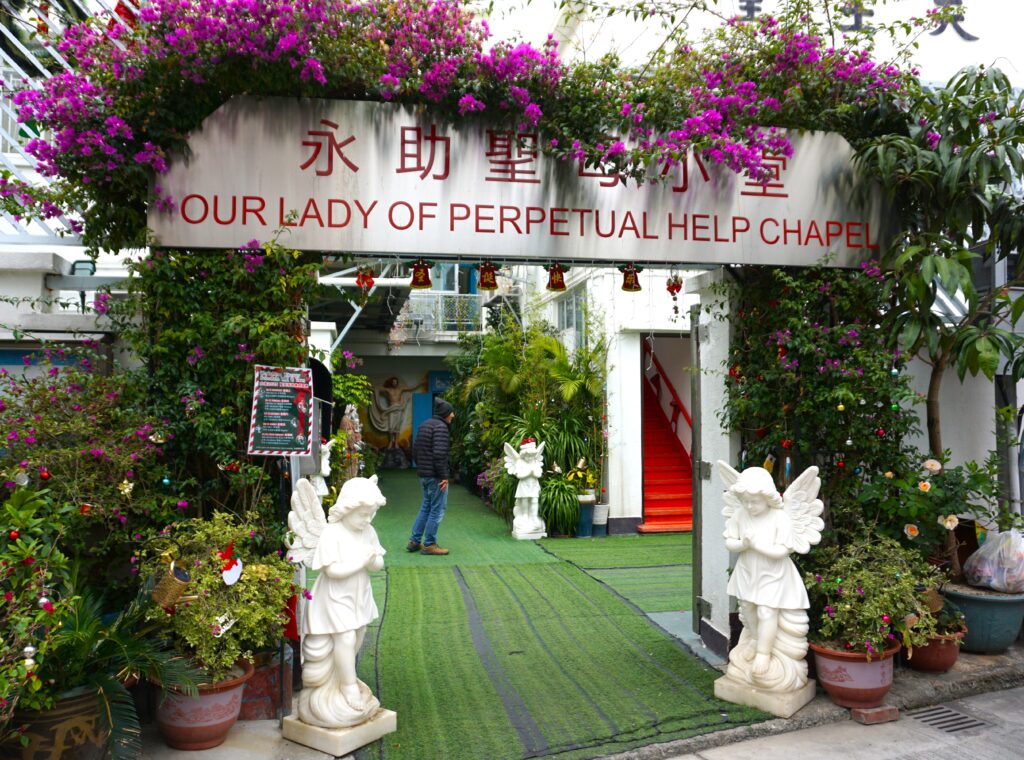
To get there, walk to the back of the chapel, out the door on your left, and walk up to the top of the stairwell until you reach the rooftop platform. It’s really a lovely view, with the river and houses in the foreground, surrounded by lush, green mountains.

When you’re done taking it in and snapping your photos, exit the way you came and continue walking along Tai O Tai Ping St towards the Market Street Drawbridge.
This time, after crossing the drawbridge and walking to the end of the street, turn left away from the village onto Shek Tsai Po Street.
This lovely walk takes you out to the Tai O Heritage Hotel, a former police station from Hong Kong’s British colonial period. The lovely hotel overlooks the river estuary. Inside the lobby is a small exhibit and a former jail cell. Take a look around, soak in the views, and read a few of the plaques on the doorways for some local history.

Make your way back to the town along the same road. If you’re feeling peckish from all the walking, grab a delicious egg waffle at Tai O Wah Kee Grilled Egg Waffle before returning to the bus station.
Bus routes to and from Tai O may change, so be sure to double-check the routes.
To get back to Hong Kong, you generally have two options:
Take Bus 11 to Tung Chung, then catch the MTR to Central Station. Or, take Bus 21 to Ngong Ping and ride the cable car to Tung Chung, where you’ll transfer to the MTR.
Be cognizant of the time, as buses stop running around 5 pm.
Pro Tip: Take a photo of the return bus schedule upon arrival in Tai O and plan your departure ahead of time.
Map of Tai O Fishing Village
This map outlines my suggested walking route through Tai O.
What to Eat in Tai O
As I said, you’ll want to come to Tai O hungry! There are so many delicious eating opportunities, from snacks to longer meals. Consider trying these dishes while in Tai O:
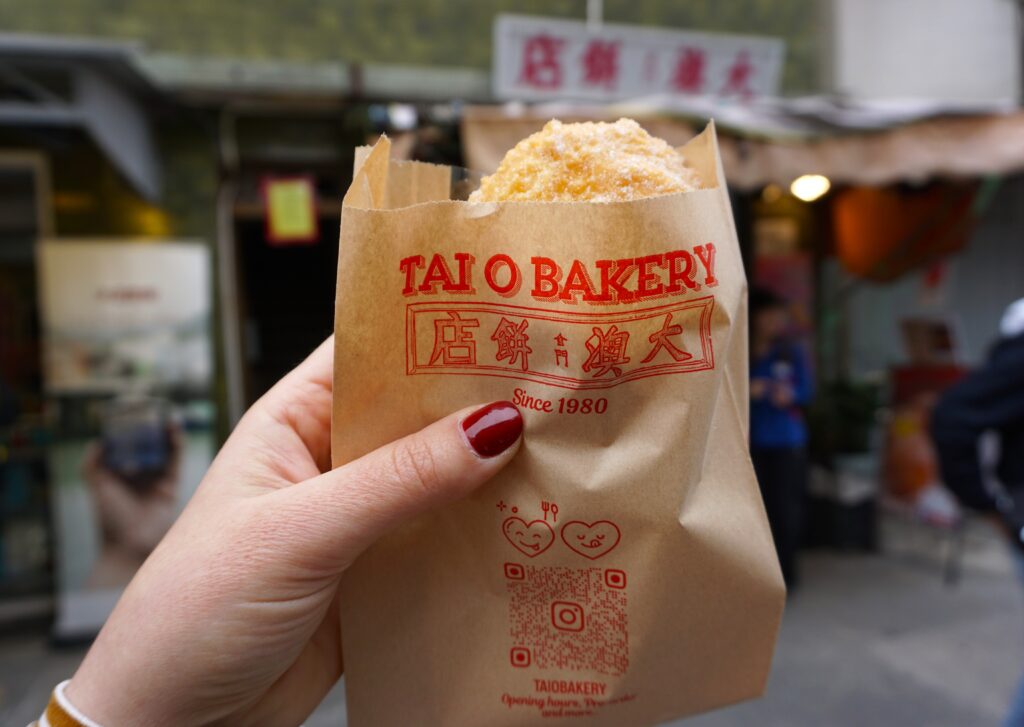
- Tai O Doughnut – Light, airy, and covered in sugar, Tai O doughnuts are pure dessert perfection. You’ll be sad if you leave Tai O without trying one of these! Grab them at Tai O Bakery along Kat Hing Street.
- Husband Rolls – This one’s for those who love savory, umami flavors. This famous Tai O snack contains stir-fried minced pork, shredded lettuce, and pungent shrimp paste wrapped inside a crispy, roti-like flatbread. It’s a burst of flavor in every bite. Grab one at Cheung Choi Kee on Kat Hing Street.
- Jumbo Fish Balls – My memory of Tai O was all the vendors selling these jumbo fish balls. Grab some of these near the Market Street Drawbridge to enjoy as you walk through the town. My favorites were the curry ones.
- Grilled Egg Puffs – You can get egg puffs all over Hong Kong (they were invented there, after all!), but Tai O has some of the best. Head to Charcoal Grilled Egg Waffle on Kat Hing St for the perfect sweet treat that’s crispy on the outside and soft on the inside.
- Frozen Fruit – Simple, delicious, and the perfect refreshment if you’re visiting on a hot day. I saw so many people walking around with frozen watermelon or mango on a stick. It looked delicious. Grab some from a vendor to enjoy as you walk!

Tips For Visiting Tai O
- Come hungry! – If you see a snack that appeals to you while you walk, purchase it from the vendor and enjoy it as you browse. Try to schedule your trip around lunchtime to maximize delicious eating opportunities.
- Pair your visit with a trip to the Big Buddha – A trip to Tai O works perfectly as part of a larger Lantau Island day trip. I suggest visiting Ngong Ping first and then heading to Tai O.
- Be mindful of the time – Bus service to and from Tai O is limited, especially later in the day. Take a photo of the return schedule upon arrival and plan your departure so you’re not scrambling for a ride back to Tung Chung.
- Visit on a weekday, if possible – Weekends bring tour groups and heavy foot traffic, which can make the narrow streets feel crowded. You want to enjoy the jarred shrimp, not feel like a shrimp stuffed in a jar. A weekday visit is calmer and makes it easier to enjoy the village at a slower, more observant pace.
Final Thoughts
Tai O gives a glimpse of a quieter, more traditional side of Hong Kong, but it’s just one piece of what makes the region so compelling. A visit to Tai O Fishing Village is perfect for rounding out any Hong Kong itinerary.
Are you planning a trip to Hong Kong? Be sure to explore my other Hong Kong guides for ideas and inspiration.
Read More: